Volunteer network promotes community education on legal rights to privacy, due process

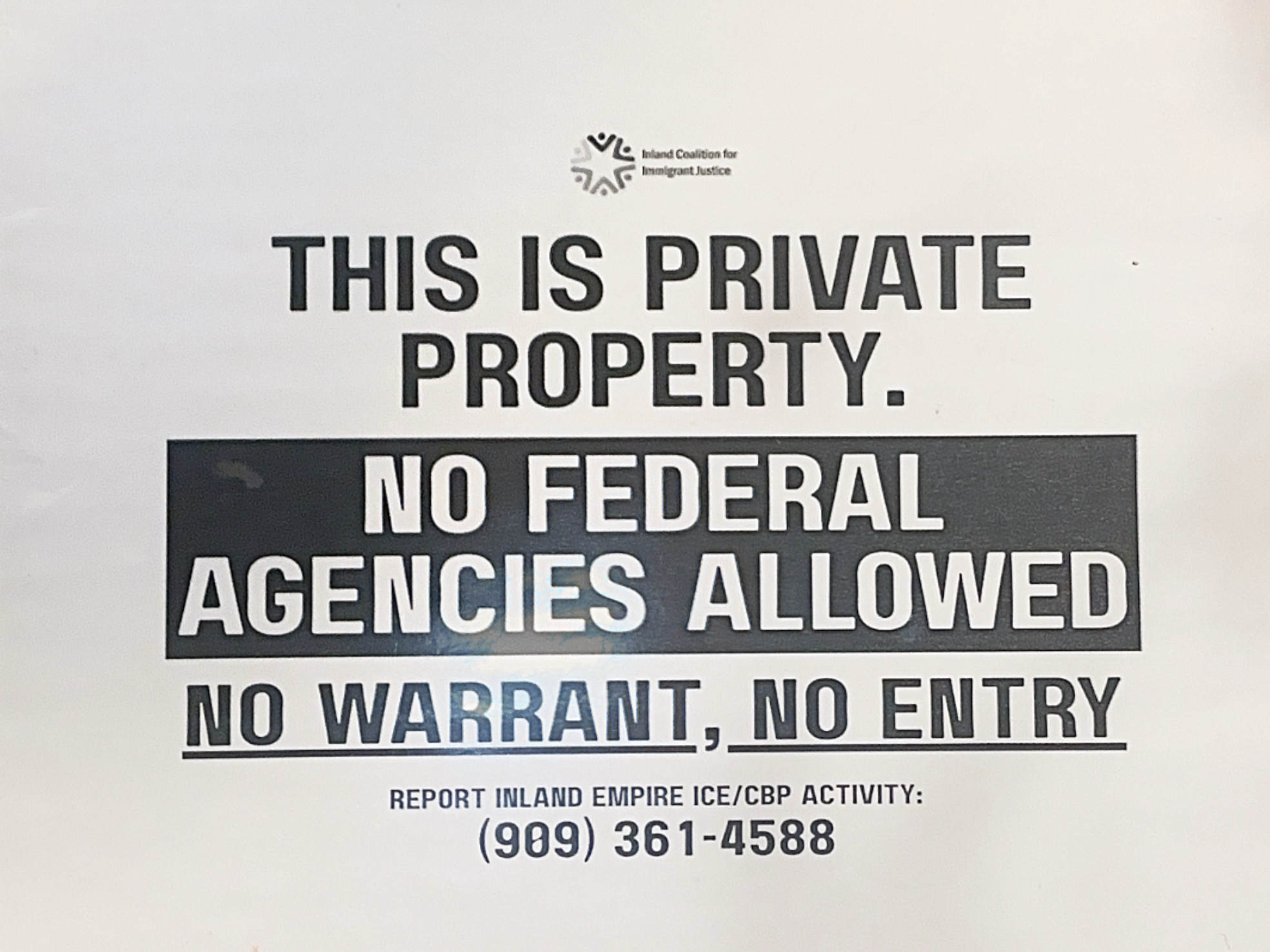
Immigration and Customs Enforcement, or ICE, has been at the forefront of President Trump’s campaign to crackdown on illegal immigration in the United States. In particular, “raids,” or unannounced enforcement operations by ICE agents, have become more visible, not only at private homes but at workplaces, businesses, and other gathering spaces. People have documented operations across the country and within the Hi-Desert community, prompting broader discussions about privacy and due process.
Daniela Sierra and Kelly Cole have each lived in the Morongo Basin for over ten years and are both part of a local volunteer network focused on educating the public about individual rights, regardless of immigration status. These efforts began with a canvassing campaign of local businesses, churches, and other organizations, and with initiating conversations about how to protect their members’ legal rights.
“It came out of an escalation of ICE raids in LA and thinking about the impact on businesses to be prepared for those kinds of raids, whether people actually knew their rights around lawful search and seizure, and asking for due process, etc. We wanted to check in with our businesses around here to make sure they understood their rights and their employees’ rights, and also to really empower them to be able to care for their employees.”
Cole and Sierra explained that volunteers connected with the community in various ways, including attending food drives and civic engagement meetings. Members of the network also received training from social justice organizations throughout the Inland Empire, including TODEC Legal Center, the Inland Coalition for Immigrant Justice (IC4IJ), and the National Day Labor Organizing Network. They say that the informal network format has been key in connecting people with different backgrounds and skills throughout the community.
“It’s been really helpful in ways that we didn’t expect…It’s flown naturally. We wanted it to be natural and accessible to everybody.”
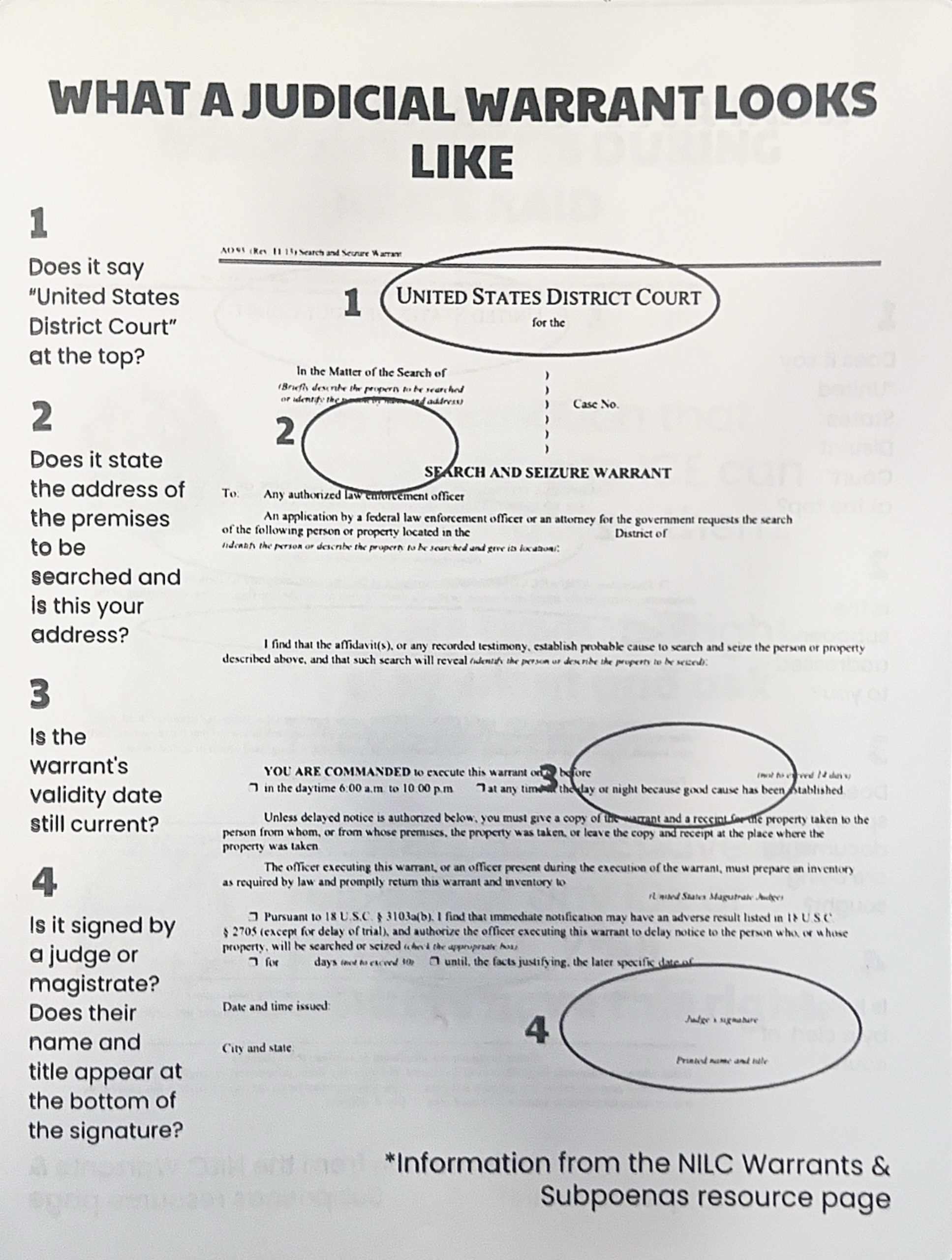
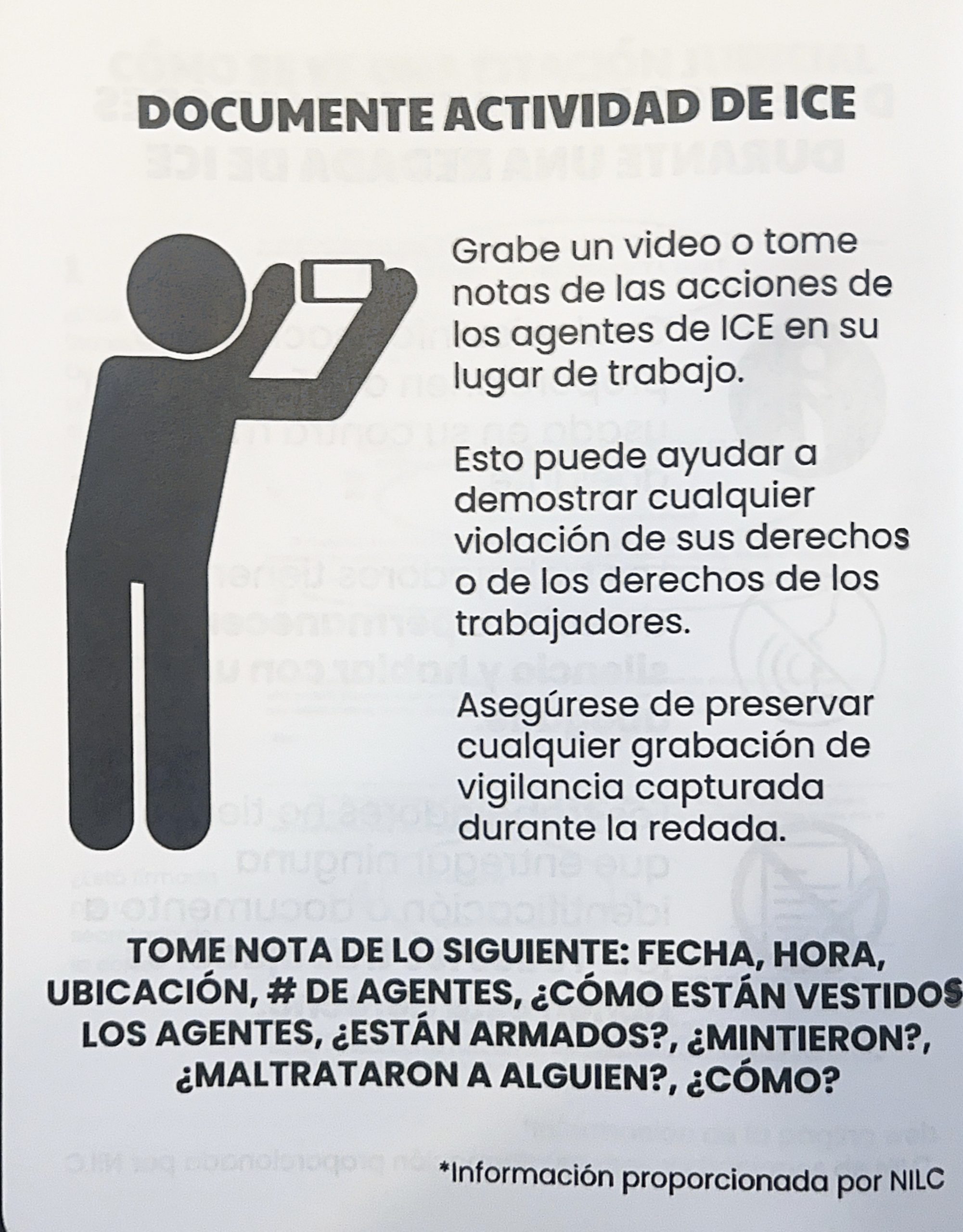
In Fall 2025, the volunteer network began canvassing businesses throughout the Morongo Basin, armed with free resource folders to offer to employers. The packets contain critical information for workplaces in the event of an ICE raid, including employers’ and workers’ legal rights, reference images of a judicial warrant and subpoena, and hotline phone numbers. The packets also include laminated signs with which workplaces can designate private areas, and wallet-size cards detailing legal rights and a script to use in the event of an enforcement operation.
“There were a lot of assumptions that if any kind of federal agent comes in, you have to do whatever they say. I think that was a big learning curve for us that is going to inform some of these community education conversations. Do we actually know our rights? Do we know that you have due process regardless of your citizenship status anywhere in the U.S. simply because you’re here? There’s a lot of misinformation about who’s allowed to have those rights.”
One recent focus has been updating employers on Assembly Bill 450, the Immigrant Worker Protection Act, which was enacted into law in February 2026. The bill prohibits public and private employers from voluntarily consenting to federal agents entering designated private areas or accessing employee files or records without a warrant. It also requires employers to provide written notice to employees and labor unions within 72 hours of receiving a federal Notice of Inspection; federal law gives employers three days to gather the required documents used to verify employment authorization.
“When we first started canvassing, it was like, this would be nice if you did this. Then the assembly bill came out, and it was actually part of labor law, and people didn’t know about it.”
As ICE raids in the Morongo Basin seemed to slow, the network shifted its focus from business canvassing to group education. Several weeks after our conversation, I attended a Rotary Club of Joshua Tree meeting at which Cole was invited to present on their community efforts. Approximately 10 Rotarians gathered for the 7 a.m. meeting; Cole gave an overview of the current immigration landscape and explained the 4th and 5th amendments and how they apply to anyone on United States soil, regardless of immigration status. The audience paid rapt attention, and some members asked questions throughout the presentation. After Cole concluded, several attendees perused and took from an array of colorful bilingual resource cards she brought to hand out.

The Rotary Club of Joshua Tree member Mary Helen Tuttle had invited Cole to present as part of the club’s weekly speaker series. Tuttle remarked, “I thought it was important that Kelly be here today because they’re not fishermen. They can’t go out with a big net and catch anyone who looks a little sketchy.”
While the educational presentation was well received, Sierra and Cole say their work truly boils down to conversation and community connection.
“A big part of it is education, but also a deep need to connect with our community. That’s the thing that’s going to keep us together as our civil rights are being taken away, stripped away. It is community that historically has always helped people together and will hold us together.”
“If we say it’s okay for any group to not have due process, that’s all of our due process. That’s part of the community education: even if ICE isn’t here, this is a bigger conversation about all of our safety, all of our rights.”
To learn more about community education surrounding legal rights, contact the volunteer network by email.
