Three bills aim to ease cost and burden of Western Joshua Tree Conservation Act take fees

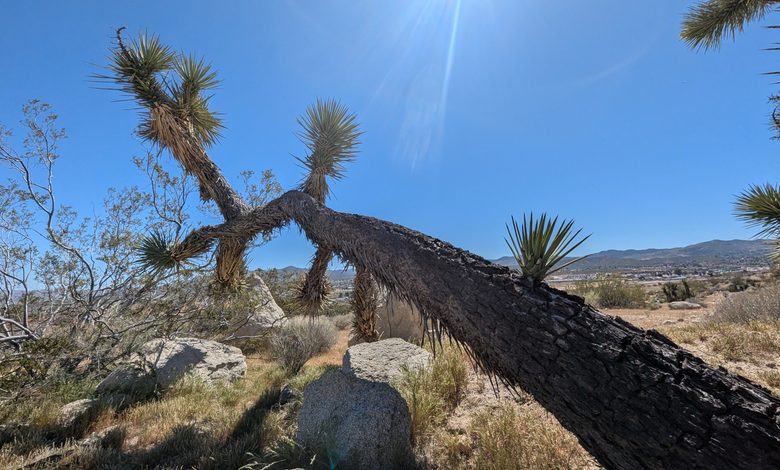
A state bill and two assembly bills are looking to ease the financial burden on property owners looking to build on land with Western Joshua Trees on it. The Western Joshua Tree Conservation Act (WJTCA) is a piece of legislation enacted in 2023 that prohibits the “take” of a Joshua Tree without paying a permit fee. A “take” is the legal term used by the California Department of Fish and Wildlife (CDFW) to describe the removal, destruction, transplant, or harvest of a threatened species such as the Western Joshua Tree.
Along with the WJTCA, the Western Joshua Tree Conservation Plan (WJTCP) is the non-legislative portion of the law that provides guidance on conservation of the species. Changes to the WJTCP could be done without lawmakers, but since the Act is a piece of legislation any changes must be done through the state assembly process.
Take permits for the Western Joshua Tree have been characterized by many as overly burdensome to single-family homeowners in the Morongo Basin and especially the Town of Yucca Valley, which features some of the densest concentration of Joshua Trees in residential areas. Fees for building near, digging around, or straight removal of a Western Joshua Tree can range from around $350 dollars all the way up to $2,600 per tree – with the definition of a tree broadening out to each individual trunk or stalk coming out of the ground.

The first is State Bill 1062, one of three bills proposed by State Senator Rosilicie Ochoa Bogh but the only one to make it through committee. SB1062 focuses on a tiered permit fee system, asking the CDFW to develop a tiered fee structure based on the project’s impacts.
Assembly Bill 1663 was introduced by Assemblymember Greg Wallis and would allow a property owner’s agent to seek out take permits under the WJTCA. The bill also seeks to simplify the requirements for the law’s already-existing no-fee hazard tree permitting process, waiving the take permit fee if a Joshua Tree is in danger of causing damage to a piece of property or has died. AB1663 would also expand tribal authority for cultural use of the endemic species.
Assembly Bill 1808 is likely to have the most impact on single-family homeowners with Western Joshua Trees on their property. The bill would allow for the trimming or removal of up to 10 Western Joshua Trees within 30 feet of a residence, or within 15 feet of an accessory structure.
It would also significantly reduce the take permit fees by 90%, ranging from $37.50 to around $250 dollars per tree, depending on the size.
Current Western Joshua Tree Conservation Act Take Fees (2026)
| Tree Size Class | Take Permit Fee (Standard Fee Zone) |
| Under 1 meter | $354.75 |
| Between 1 meter and 5 meters | $521.75 |
| 5 meters or greater | $2,609.00 |
| Tree Size Class | Take Permit Fee (Reduced Fee Zone) |
| Under 1 meter | $156.50 |
| Between 1 meter and 5 meters | $208.75 |
| 5 meters or greater | $1,043.50 |
The California Department of Fish and Wildlife have a map showing the areas that are included in the reduced fee zone.
The changes introduced in AB1808 are limited to properties with occupied single-family residences on them, and don’t apply to vacant lots and new builds. The bill also has provisions for public works projects as well.
All three bills received wide support from state assemblymembers and senators, and are now awaiting approval by Governor Gavin Newsom.
Read more on the Western Joshua Tree Conservation Act and Plan at the CDFW’s website.