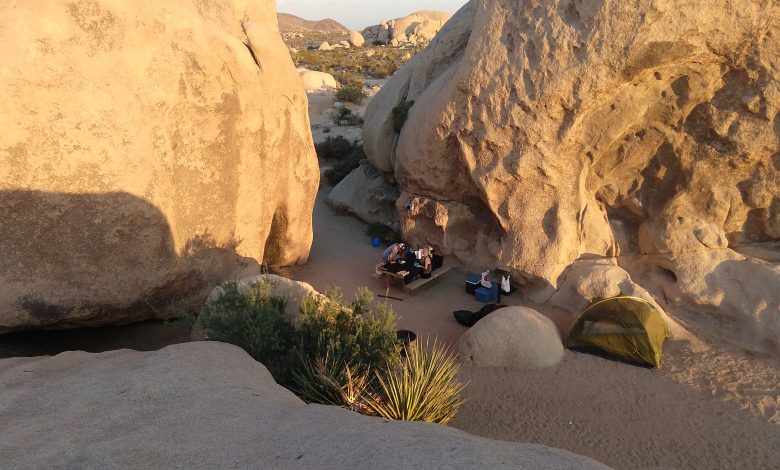
Joshua Tree private campground approved: “We have many more coming”

The Board of Supervisors approved a campground in Joshua Tree over the concerns of neighboring residents, and suggested that more are on the way to the Morongo Basin. Here is reporter Adeline J. Wells with more from the county meeting.
At Tuesday’s meeting, the San Bernardino County Board of Supervisors held a public hearing regarding a campsite in Homestead Valley. Mercury Dry Camp is a proposed 7.5-acre, 12-site campground located at 62076 Mercury Drive in Joshua Tree. The County Planning Commission approved the Conditional Use Permit for the campground at their April 9 meeting, and Joshua Tree resident Wendy Wacker appealed the decision. Board of Supervisors Chair Dawn Rowe conducted the order of operations at the hearing, and Supervisor Curt Hagman was not in attendance.
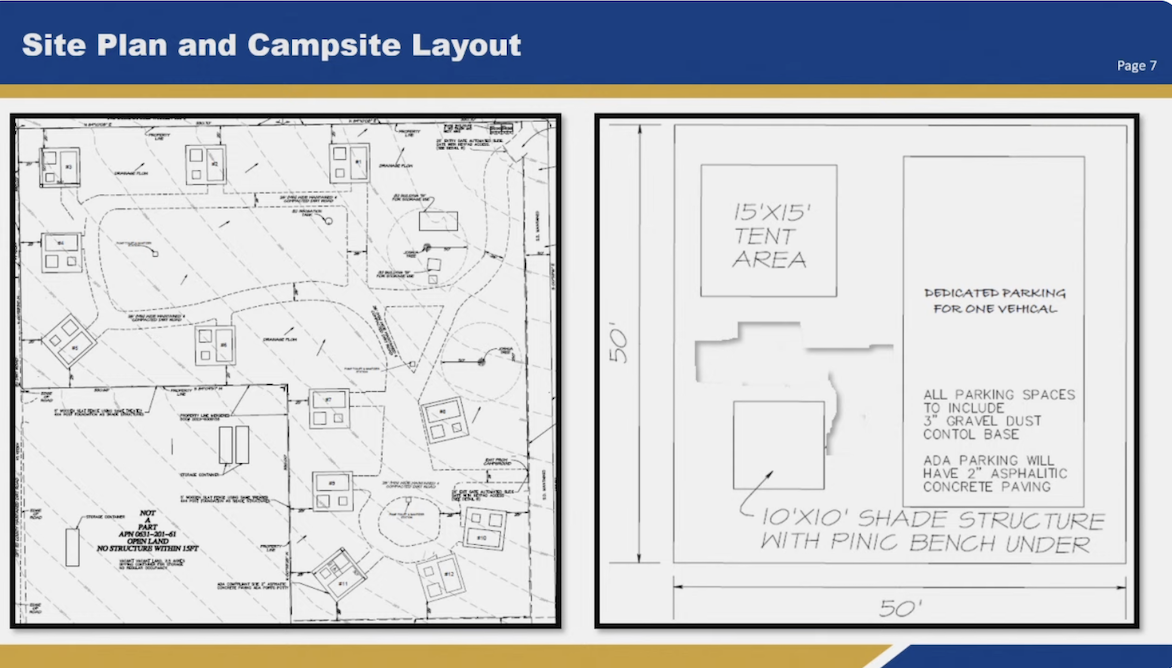
County Planning Manager Paul Toomey provided an initial presentation on the case. Mercury Dry Camp is owned by David Lee and Joseph Milburn, who initially submitted a CUP application to the Land Use Services Department in 2023. The term “primitive” was frequently used throughout the presentation by Toomey and the applicants to describe the campground; there are no water, sewer, or power hookups, and lighting is restricted to solar-powered pathways to the portable restrooms. Each campsite includes a wooden deck and shade structure; 2 individuals and one vehicle are allowed per site, and RVs are not permitted. While the campground does not have an on-site manager, the Planning Commission mandated that a manager be within a 15-mile or 30-minute radius from the site, with noise monitors and security cameras to provide additional monitoring.
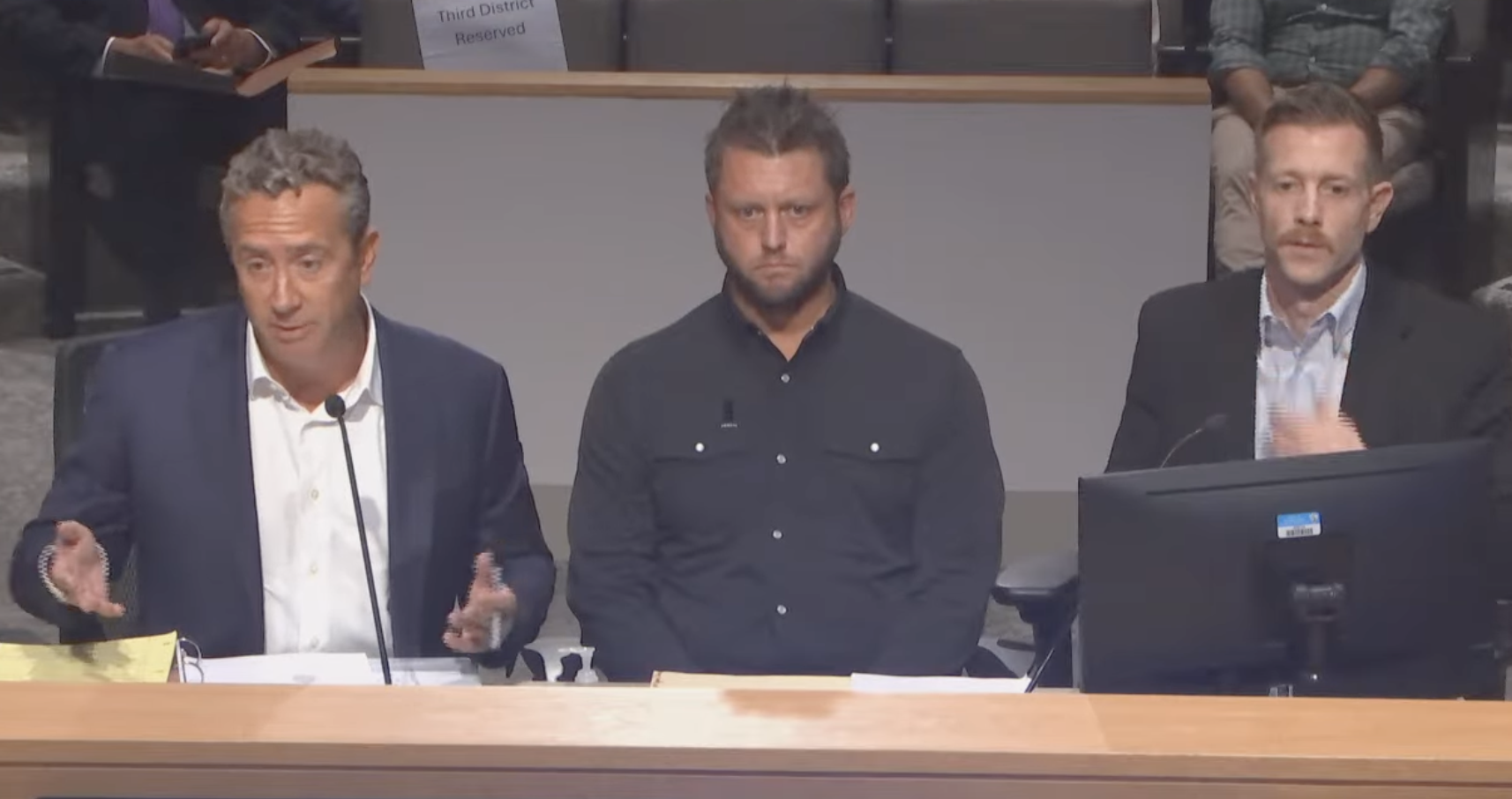
Appellant Wendy Wacker presented her case with her attorney, Donovan Collier, along with real estate valuation professional Frederick Chin, who suggested that property values near the campground will likely decrease. Collier argued that a transient commercial campground is incompatible with the Rural Living district in which it is proposed, also citing the lack of an on-site host and safety and environmental concerns as grounds for the appeal. Wacker explained that she owns 160 acres adjacent to the campground and has already experienced issues with trespassing, light pollution, and firearms since 2023.
“This is the Rural Living zone. It exists so that people like me can build a life around space, silence, and the land itself. A commercial campground open around the clock to anonymous strangers with no host and no supervision is not a rural residential use. It is a business, plain and simple, and it does not belong here.”
Lee and Milburn, along with their attorney Paige Gosney, presented the campground as a passion project. They argued that there is a need for more legal, managed campsites throughout the Morongo Basin, with Joshua Tree National Park containing roughly 500 campsites while sustaining over 3 million annual visitors. Gosney added that the co-applicants submit the project to a CEQA review, an MMD analysis, and a supplemental noise analysis, and that everything about the campsite is designed to be impermanent.
“I think this is the exact project that you wanna have in this area of Joshua Tree. It’s maintained, it’s monitored, it’s enforced, it’s fenced. There are strict rules. There’s all the things that the County is going to want to see to make sure that there are no nuisance impacts that affect unregulated camping.”
The majority of the nearly 10 public comments were made by neighboring residents of Homestead Valley opposing the project. Common concerns included the lack of on-site supervision and a lack of respect for the vegetation and neighborhood, as expressed by Micah Marcus.
“You’ve heard issues of collegiality, of working with the neighbors. Well, here are all the neighbors. I haven’t heard any cooperation or consideration as to the impact it’s having on them.”
The co-applicants also submitted letters of support written by community members, and several comments endorsed the project. Resident Murad Eissa cited Joshua Tree’s status as an Airbnb hotspot as evidence that there are already commercial aspects to residential zones.
“The whole city is Airbnbs: the concept that there are just local residents and no commercial aspect to Joshua Tree is far-fetched to me. The whole community is a commercial aspect…I am in favor of the campsite. I’m in favor of it in a responsible manner.”
Following Public Comment, the Supervisors provided their thoughts. Supervisor Rowe argued that emergency response times would be comparable to other remote areas of the Morongo Basin, waving concerns about on-site supervision. However, she did raise the point of adding language that would prohibit the use of noise-generating electrical devices, such as generators, as well as mandating that trailers be detached and parked elsewhere on the campsite, so as not to incentivize the use of off-road vehicles to trespass on neighboring private property.
With that modification, the Board denied the appeal and approved the Conditional Use Permit, which, as Supervisor Rowe confirmed with Toomey, is allowed in Rural Living (RL) zones.
“We have campgrounds that have been allowed with Conditional Use Permits already. They have gone through the Conditional Use Permit to be allowed, and we have them in the Morongo Basin.”
“Correct. If I might offer, we have many more coming.”
Previously Reported:
