A trip through our region’s wild and wonderful history through the Morongo Basin Historical Museum


Following the initial efforts by local historians Joan Wilson and Ruth Long, The Morongo Basin Historical Society was formed in 1999 to preserve the region’s history for future generations. Its logo is a windmill and cattle watering trough representing Warren’s Well, the center of social life for early Yucca Valley (formerly “Lonestar”) settlers, (its memorial plaque is now located behind the Yucca Valley airport).
While the early historical society would meet regularly at local businesses, they didn’t have a homebase until they inherited the home of Vernette Landers when she passed in 2007 (Vernette was the widow of Newlin Landers, who both founded the town of Landers). The following year, the Society moved their archives into its permanent headquarters where it stands today at 632 Landers Lane. However, it didn’t become a museum until the pandemic, when the Society purchased a collection from former members, as explained by Vice President Stephanie Varga.

“It was such a huge acquisition they had to renovate the garage to hold the collection, and it was around that time they said, ‘We got a museum right there. Let’s turn the whole Historical Society into a museum. That’s when they pulled in Justin Moreno (as President). He’s a big nonprofit guy and he has the knowledge and the resources, so he came in and was tasked with helping pull things out of storage, rearrange the furniture—they actually moved walls around to what to ‘museumify’ this building,” said Varga.
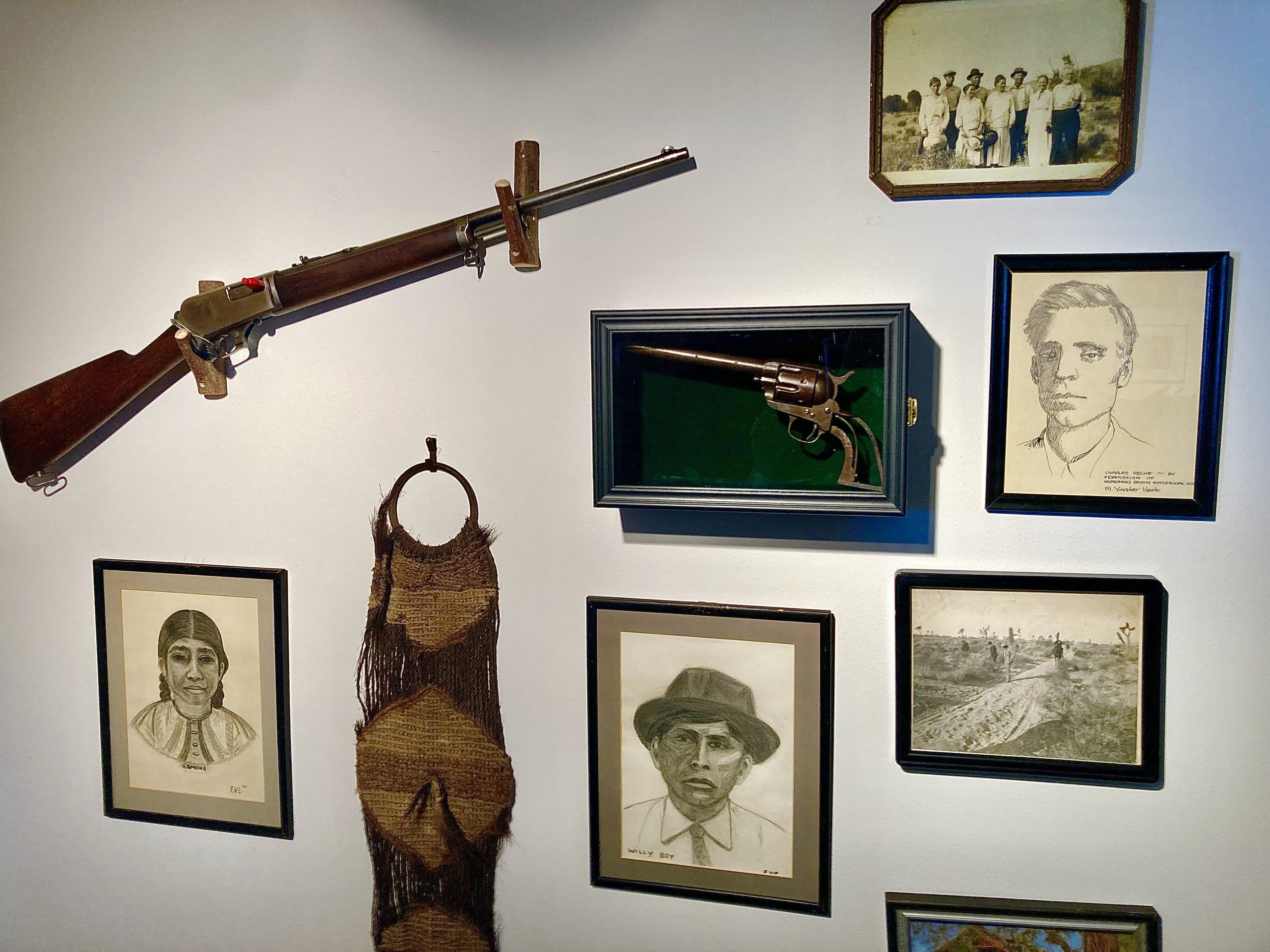
When entering the main building, one of the first displays is dedicated to the famous 1909 Willie Boy manhunt, with portraits of Willie Boy and Charles Reche (of whom the main road in Landers is named after), along with the firearms they wielded in the fatal shootout at what is now Gubler Orchids on Belfield Boulevard.
Because they founded Landers and were “movers and shakers” in the Basin’s earliest days, Newlin and Vernette are a large presence at the Historical Museum with a whole room dedicated to their lives. The room tells their story and is furnished in the vintage style of how they lived, complete with personal artifacts, like pilot Newlin’s model airplane. Varga introduced the story of Impy, Vernette’s domesticated bobcat she turned into a regional mascot.
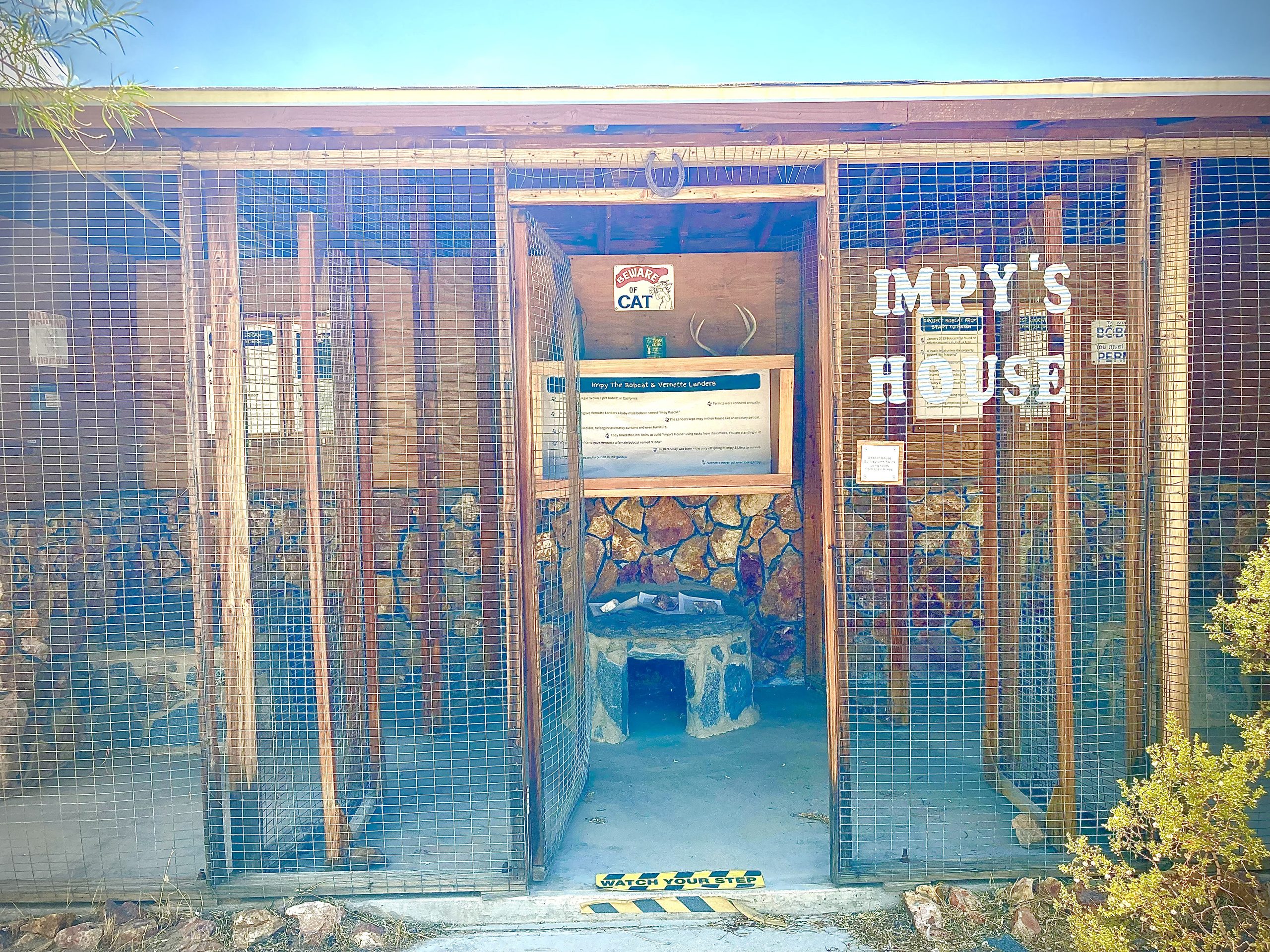
“Someone gave Vernette a bobcat cub, and this was in the early seventies before it was illegal to keep wild animals as pets. So Vernette raises this bobcat named Impy, and she tries to bring in Impy into the house and Impy is a terrible pet, just tore stuff up. But she loved Impy and she used to drive around town in a convertible with Impy in the car and then he’d get out and climb trees and then they couldn’t get him down. But then she got another bobcat named Libra, a female, and so she actually bred Impy and Libra and had wildcat cubs. Then she got ambitious and bred Impy to a Siamese cat because she wanted to start her own breed.”
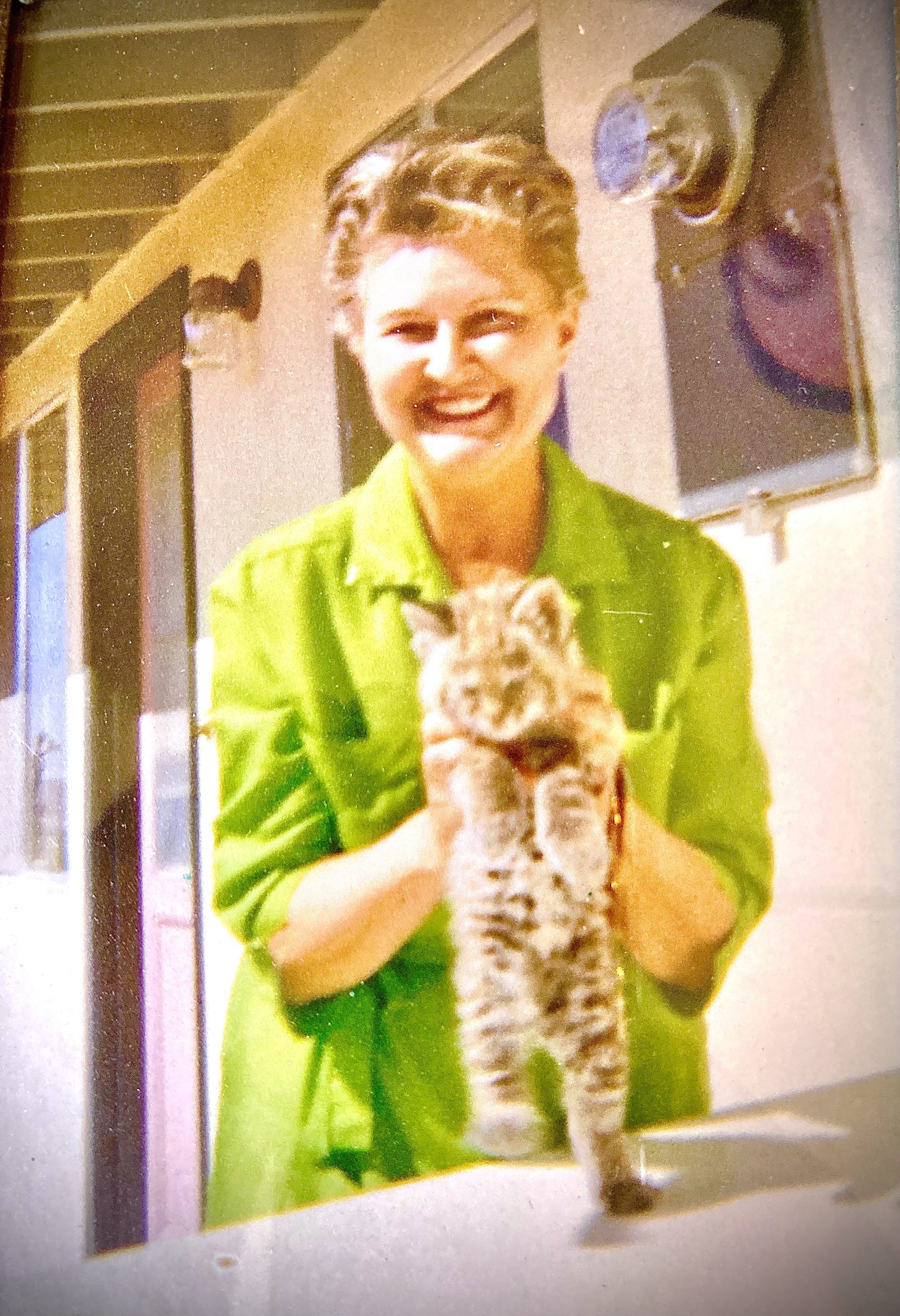
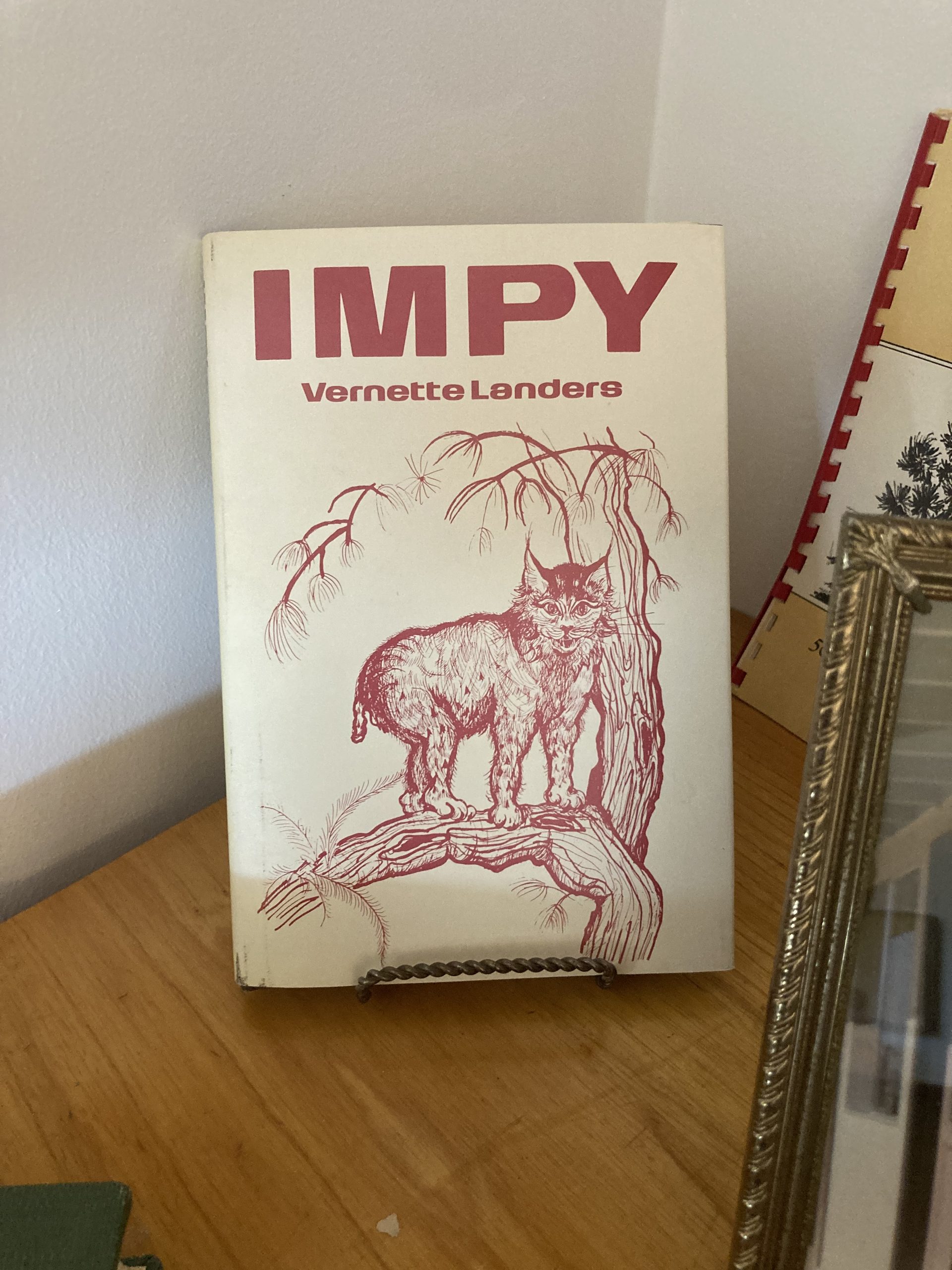
Varga maintains Vernette was a highly educated renaissance woman, a Vice Principal at Twentynine Palms High School who also founded the Landers post office, yet all the while, Impy remained a focus:
“Meanwhile, she’s writing books about Impy! So there’s a whole series of children’s books that she authored, self-published, and she illustrated them as well.”
Varga then showed me the Veteran’s Room, highlighting the large military demographic not only due to the Marine Base, but the influx of World War “lungers”: veterans who sustained breathing injuries from chemical warfare who moved to the high desert for the fresh air.
“Especially after World War 1 with all the mustard gas, the desert has always been identified as a place for people who have respiratory problems. There was a military doctor, Dr. Luckie, who was stationed in 29 Palms, and he encouraged veterans to come out here for their health. So that’s one of the reasons why there was so much homesteading done.”
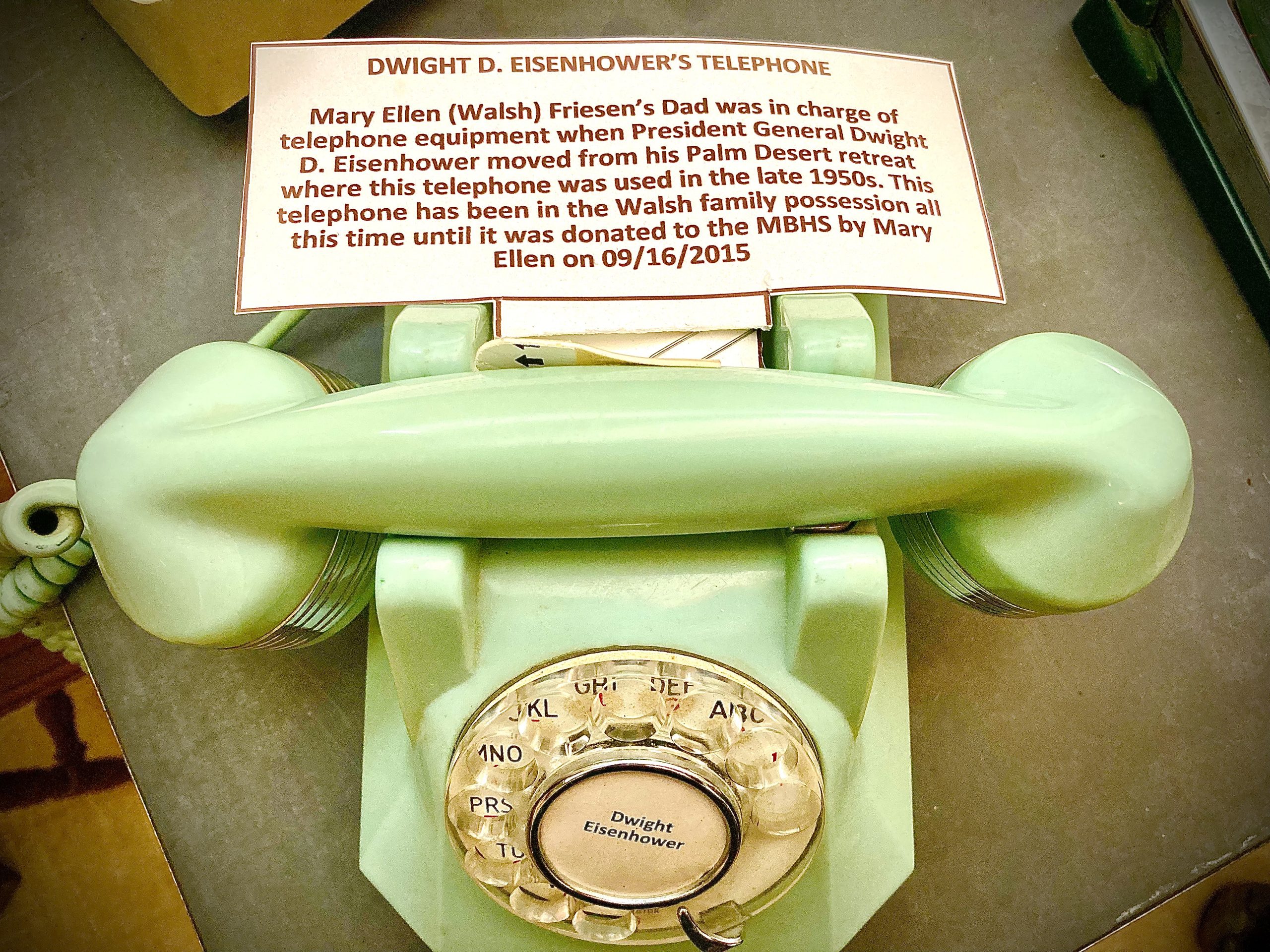
Among Veteran artifacts dating back to the Civil War to the Gulf War, from newspapers to medals, Varga showed me a vintage foam green telephone belonging to President Eisenhower, who had a home in Palm Desert in the 1950s.

On the other side of the museum is the Integratron Room, dedicated to the life work of UFO researcher George Van Tassell. The room is darkened with curtains while a film plays about Van Tassell’s adventures surrounding Giant Rock.
“When he was raising money for the Integratron, he was sending out these newsletters called Proceedings. It was all part of the intergalactic spaceship conventions he held. I learned they had up to 5000 people at these conventions, and they went for years.”

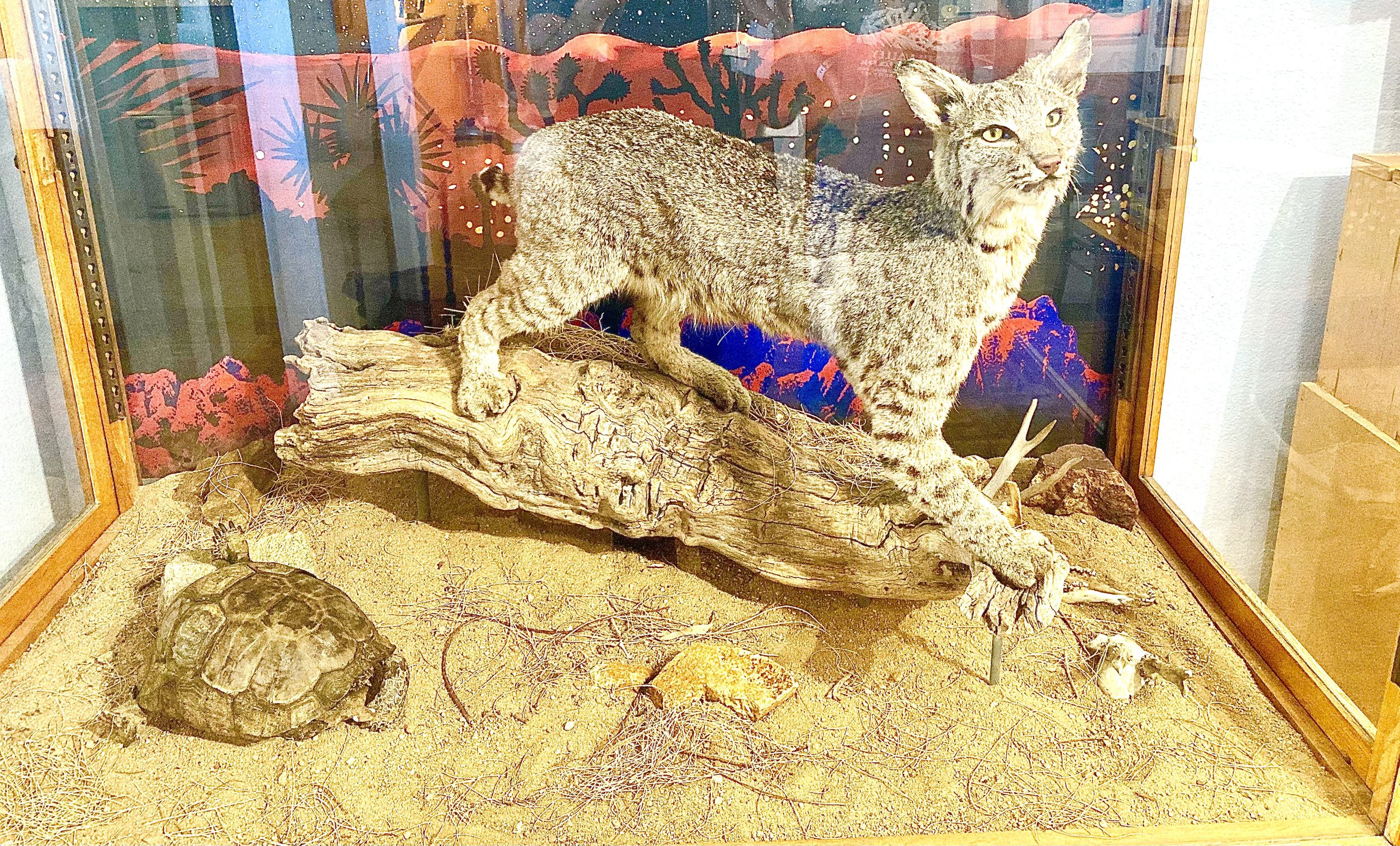
Past the museum’s functioning kitchen decked out in vintage grocery and cookware, Varga shows me the Natural History Room. A huge glass encased stuffed bobcat is the focal point among shelves of bones and skulls, butterfly specimens, and collectable animal ceramics made by infamous Joshua Tree ceramicist Howard Pierce.
Among the 5 other structures outside of the main museum, Varga took me to the Moharve Mercantile, a preserved general store named after Society member Harvey Labrone, filled with one of the Society’s expansive collections. Harvey and his wife Monica would travel the country collecting vintage mercantile items: old grocery, pharmacy, alcohol, and practical-living treasures; antique bottles and a vast collection of white ceramic cookware.
The Mercantile also holds a large collection of Western film star Tom Mix memorabilia (who has a road named after him in Pioneertown) and as a tribute to him and the collection, the Museum screened his film “The Great K&A Train Robbery last May to a sold-out crowd.
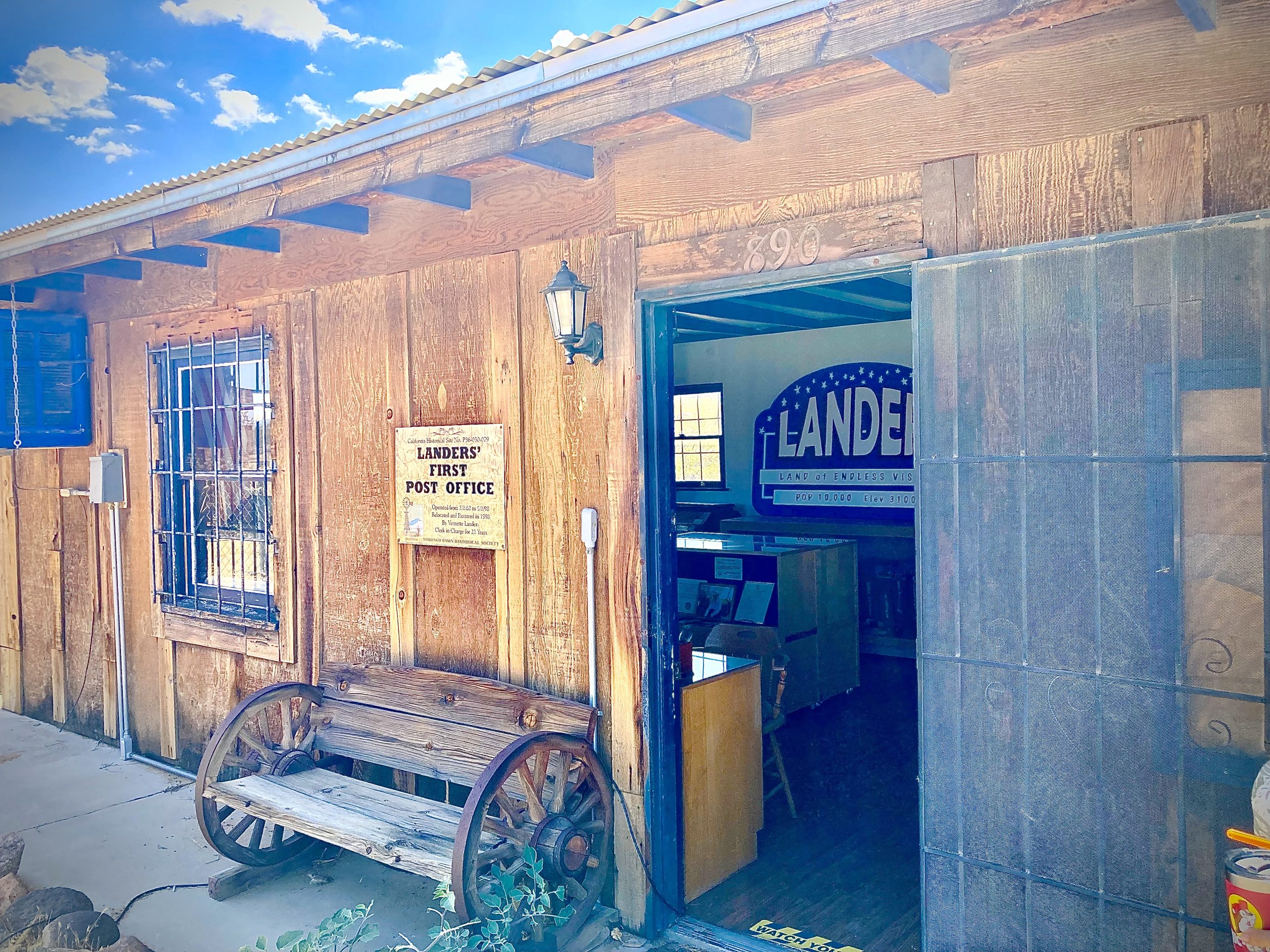
Varga concluded our tour at Vernette Landers’ crown glory: the original Landers Post Office now located about 30-feet from the main house after its relocation from Reche Road. Vernette was tired of going all the way to Yucca Valley to pick up her mail, so she petitioned for the right to open her own post office, where she worked full time after leaving her Vice Principal position at Twentynine Palms High. Her desk and typewriter are displayed fully preserved as she would have sat and worked.
The Morongo Basin Historical Museum is open on Saturdays from 11:00 a.m. to 3:00 p.m. Admission is free, or you can join the Historical Society for a mere $30.00 a year. The Society is always looking for enthusiastic volunteers to help with the collection, exhibits, events, and yard work. For more information, contact the Society through: mbhistoricalsociety.org
