
Reporter ride-along: What does the California Highway Patrol see?


Listen to a longer version of the story that was aired on Z107.7FM:
For residents of the Morongo Basin, Highway 62 is our hometown freeway – the main thoroughfare that connects multiple communities, along with Highway 247, and some other well-worn side streets. I wondered about the men and women of the California Highway Patrol (CHP) who monitor these roads … What antics and behaviors are they seeing? More importantly, how can I avoid getting a ticket?
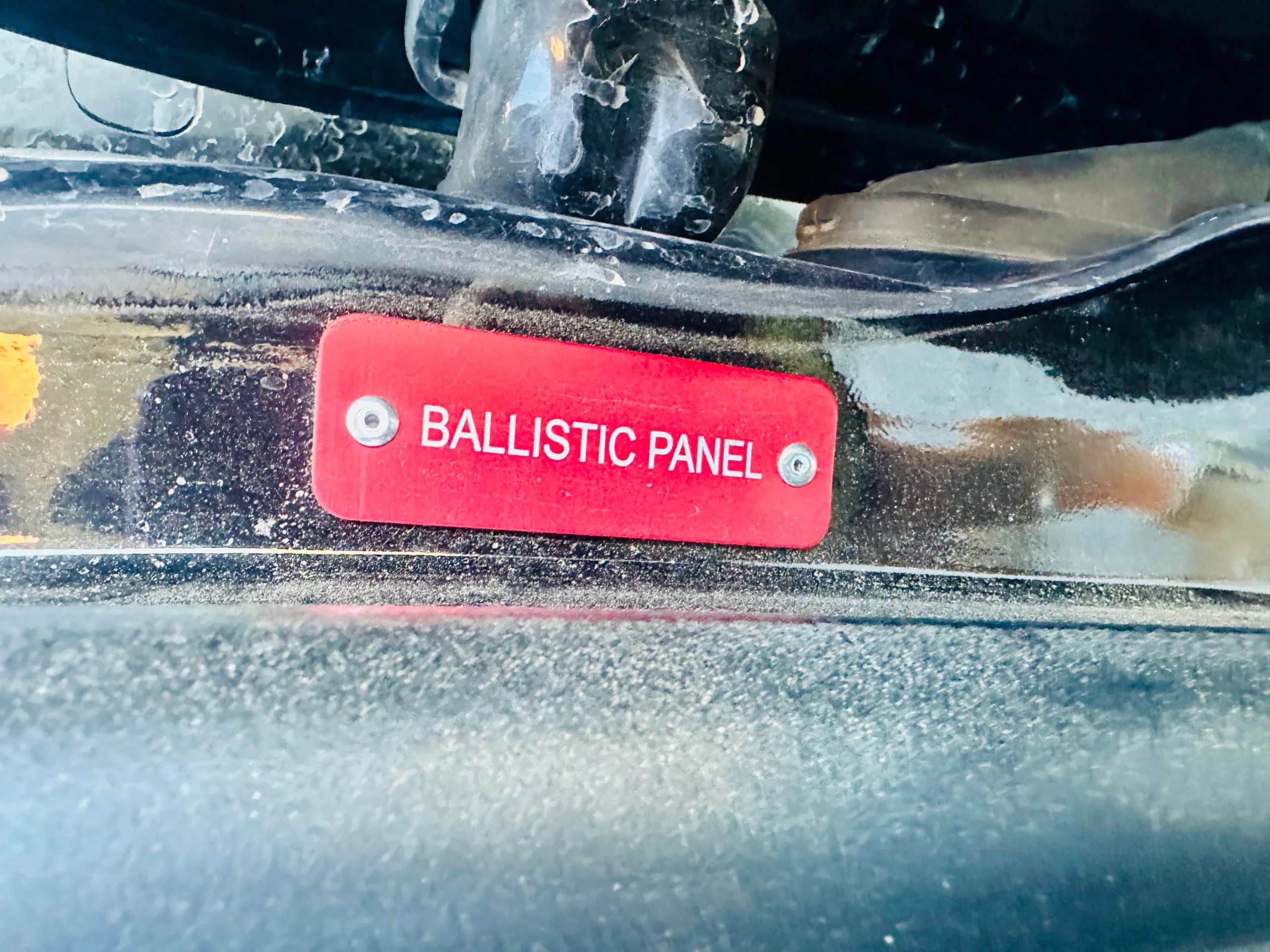
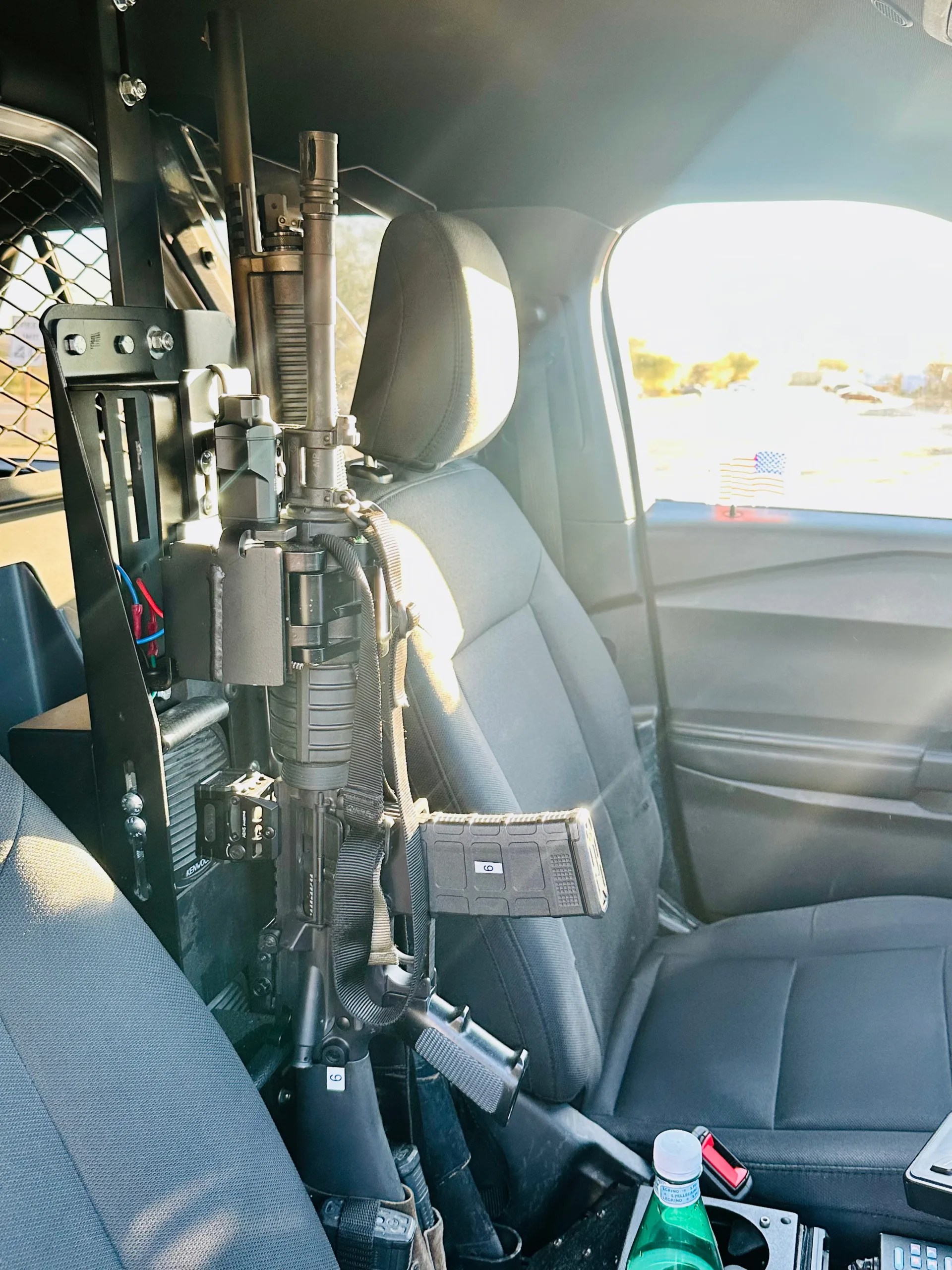
Like most big questions, the answers require an early start. So, at 7:00 a.m. one weekday morning I met up with Officer Jake Griffith, who graciously made room for me in his patrol car. Officers pair up at night but are solo during the day. I took the passenger seat, snuggled in between a secured AR-15 (Colt M4) firearm and a heavy car door labeled ‘BALLISTIC PANEL.’
I tagged along as the officer worked his ‘beat’ – the eastern edge of Twentynine Palms up to the border of Yucca Valley. Back and forth we went, especially along that troublesome corridor between downtown Joshua Tree up to the Yucca Valley border at La Contenta/Yucca Mesa Trail – lots of speeding tickets happen in this stretch.
In CHP lingo, highways are called ‘Lines of Communication’ and the agency handles not just traffic enforcement, but any major crimes that occur along these lines. CHP’s jurisdiction is “all roads and all codes” in the Golden State.
Clearly, obeying all traffic laws is the best strategy for avoiding a traffic ticket. But, if you do make a mistake, here’s a tip: Don’t argue. Applying regular training, years of experience, their own eyeballs, and a digital speed radar, it’s their entire job to pay close attention and spot these transgressions. Beyond initial training, CHP officers do a re-training every year for radar certification where they must also estimate speeds visually.
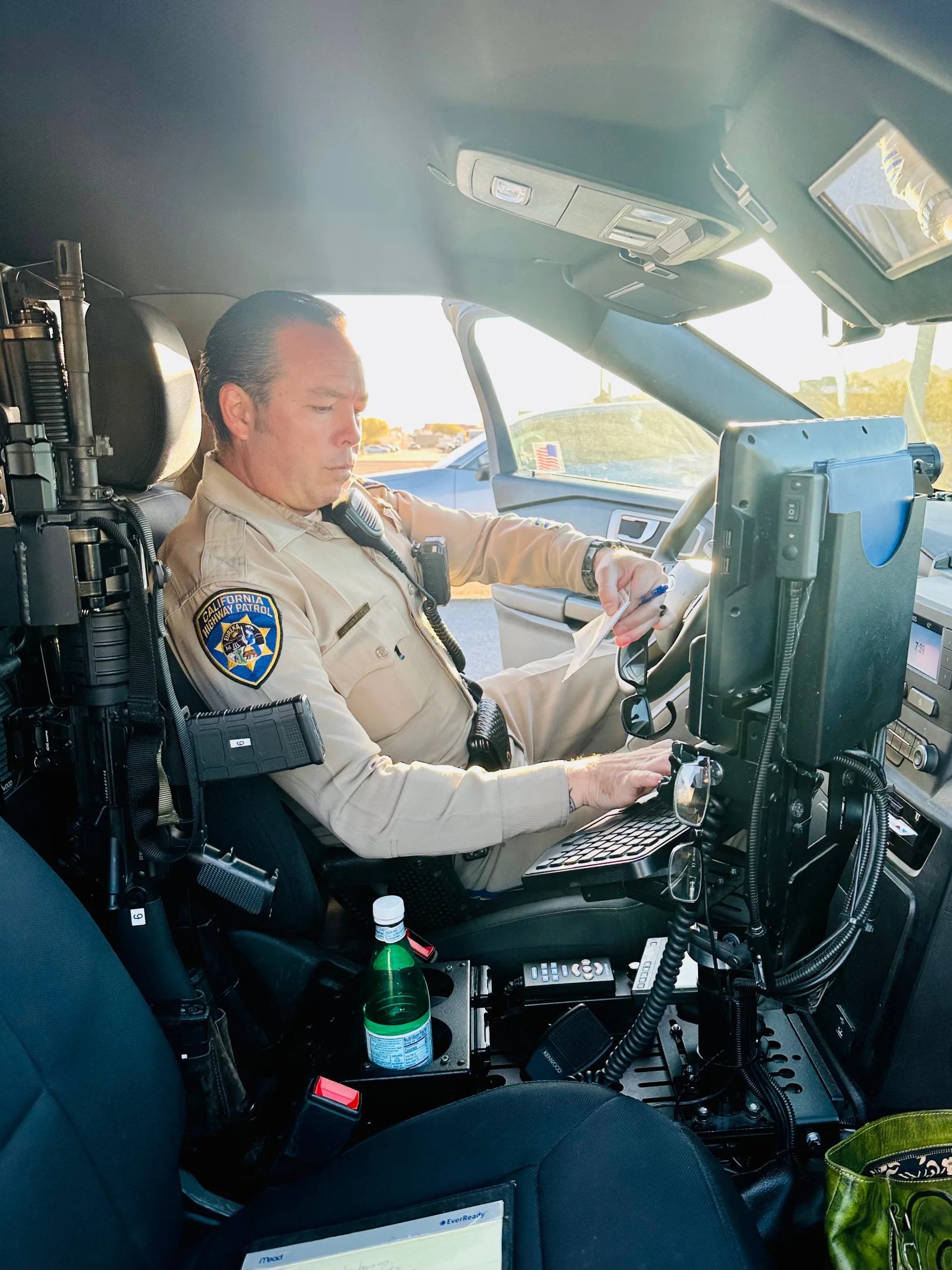
“Behavior often influences whether you go one way or another. I’ve made stops where I’m like ‘I’m not gonna write this guy (a citation), they did something stupid right in front of me – they are just having a bad day, wrong/place, wrong/time, and I walk up and they are such a jerk that I forget that I wasn’t gonna write ‘em a ticket. I’ve had numerous people make me write them a ticket,” said Officer Griffith.
Officer Griffith and his colleagues are not robots, but actual human beings, and like most, they have pet peeves. Unlike most, Officer Griffith gets to address those peeves directly and with some authority.
For starters, drivers towing trailers in the passing lane (often exceeding the 55-mph speed limit for towed trailers), heavily tinted windshields beyond factory settings, and ‘left-lane drivers’ – those who hang out in the passing lane regardless of speed. California Vehicle Code 21654 (CVC) makes it illegal for drivers to hang out in the left lane if they are going slower than the “normal speed of traffic,” even if they are driving at the posted speed limit. While exceptions exist for bad weather or road conditions, violating this law can result in a ticket, fines, and one point on your DMV record.
If others want to drive faster, that’s their business – something for Officer Griffith to deal with, not you. This traffic-clogging behavior is frustrating for other drivers and can lead to aggressive actions such as tailgating, flashing lights, and other road rage conduct, also illegal and very dangerous.
“I’m not going to stop someone from going five under the speed limit but if it’s 55 and you’re going 45 and you have a line of traffic behind you, you’re impeding and that’s illegal,” said Officer Griffith. “That’s just as bad as a guy going 65 because now you are going to have Illegal unsafe passing. People getting irate.” These high emotions, Officer Griffith explained, can set the stage for a road rage incident..
Officer Griffith has been with the CHP for 17 years. Prior to that, he was in the Marines and stationed at the Twentynine Palms MAGCC base in 2nd Battalion, 7th Marines (2/7) as a lieutenant, ultimately transferring to Barstow as a Captain. He has remained in the Reserves.
On the day I joined Officer Griffith, he had just finished up several months of a desk assignment and was happy to be back on the road again. Is it fun, I wondered, getting to legally drive fast for a living? With a grin, he confessed that it was, and that he was also grateful for the driver training refresher they receive every other year. Officer Griffith likened the perk to being the referee at a roller rink. “The guy with the whistle? He could skate forward, backward, sideways, fast, slow, whatever. It’s like that,” said Griffith. “This is a really tricky job. We have to engage in inherently unsafe behavior – U-turns where they’re not allowed, aggressive breaking …but the training they provide is helpful.“
Officer Griffith said that while he may see several cars speeding at once, it often comes down to which car he can safely pull over and cull from the herd, so to speak. He indicated that most speeding citations are given early in the morning and at the end of day. On this particular day, he was mindful of having a reporter in the car, so he went easy on the braking and acceleration, much to my disappointment.
When signaling drivers to pull over, Griffith is alarmed how often he must use the loudspeaker to guide them to pull off on a side street, parking lot, or other safe spot. He once had a driver stop at the crest of the Morongo grade when he put on the flashing lights – a real hazard.
Inevitably, Officer Griffith spots a violation, and makes a tight U-turn – a work truck pulling a trailer in the left lane and going over the speed limit. He guided the driver using the loudspeaker:
“Pull off the road. Don’t stop here. It’s not safe. Don’t stop here. It’s not safe. Pull off the road. Make the next right. Make the next right.”
He notes no license plate on the trailer and expired truck tags. The driver states it is a work vehicle so the fix-it ticket goes to the employer, but the driver is still on the hook for driving in the wrong lane and exceeding the speed limit.
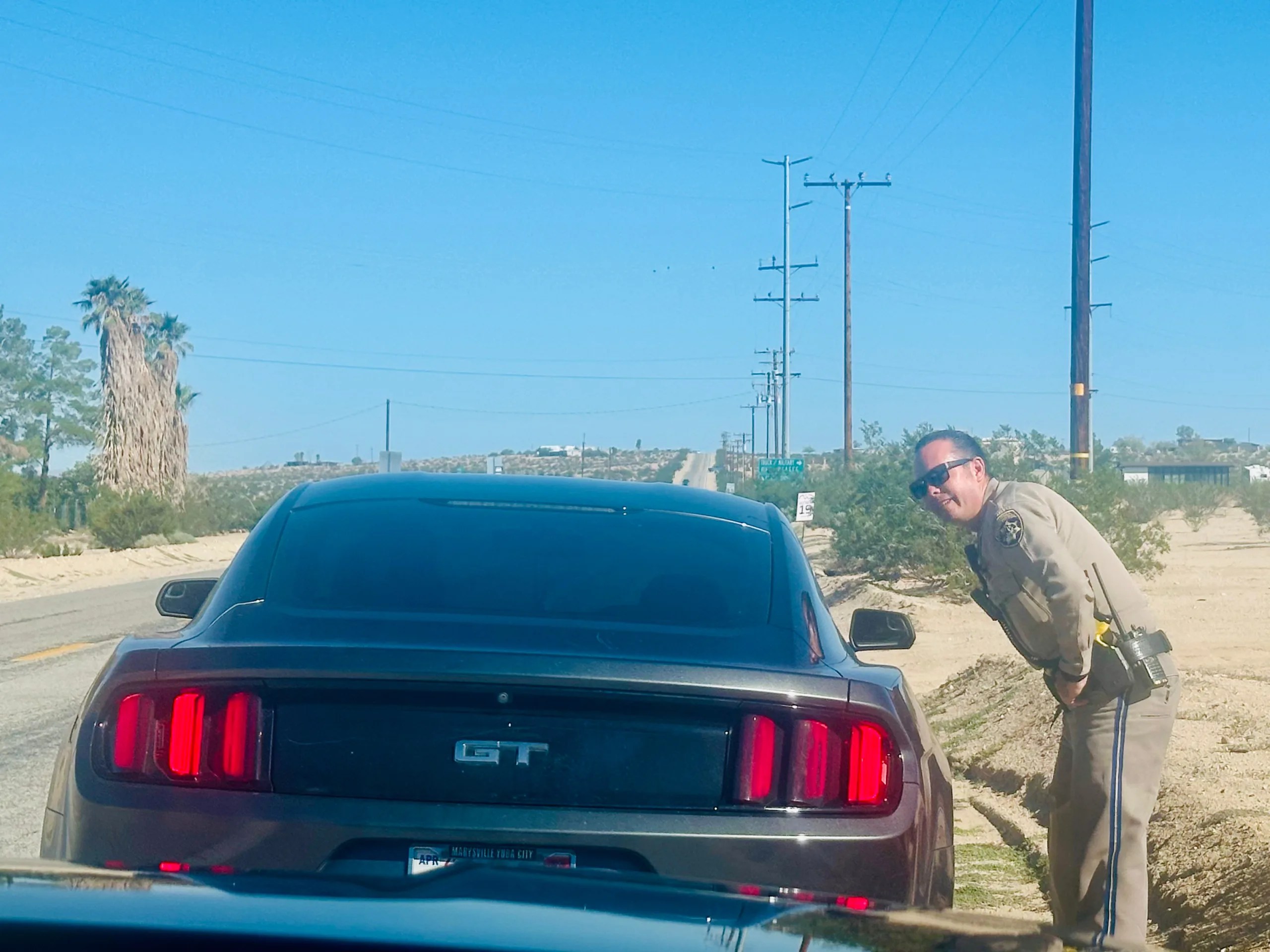
At one traffic stop, I noted a county sheriff had also parked nearby, and asked Griffth about it. “Just to make sure I didn’t need anything. We do that for each other. Not a lot of areas do that. Because we don’t have police. It’s a rural area. A very big area. Not too many of us out. Today, just me and Jason (his colleague) for CHP. He’s my back-up and I’m his. Same for them. If I’m out in the boonies, my closest back-up might be a deputy, and I might be theirs. We’ve got to take care of each other. I’ve heard there might be animosity or competition (in other regions). Out here, we’ve always had a good relationship. My best friend is a sheriff detective,” said Officer Griffith.
I ask about drunk drivers but before he can answer, he spots a car coming in hot at 90-mph heading into a 45-mph zone. We accelerate, flip the lights, and he pulls up swiftly behind the car and verbally guides the driver to a safe spot on a side street. The car was bearing a Semper Fi sticker so Griffith knew he’d be ticketing a fellow Marine, something that clearly pains him, often.
After issuing the citation, Officer Griffith returned to the vehicle, shaking his head. “This is gonna be about $500 and he doesn’t make much money but he’s going twice the speed limit! Even I don’t drive that fast!” said Officer Griffith. He noted that Marines are quick to look out for one another but also quick to keep each other in check. He’s hoping the stiff penalty will make the young Marine be more careful in the future. (Tip #2: Cruise Control is your friend, it can curb those speedy habits.)
Other persistent issues Officer Griffith notes are phones/distracted driving, not wearing seatbelts, and tourists on recreational drugs.
“Drugged driving, it’s a big issue. Everywhere. In our area, marijuana, for sure. People don’t know necessarily how to responsibly use marijuana. I feel like it’s often tourists that often come out here who get stoned on shrooms or LSD. We had a young officer here get attacked – earlier this summer. People think, ‘What’s the harm in taking a psychedelic drug?’ Well, that’s the harm – if you have a bad trip. You could end up with felony charges. Or you could end up hurting someone or worse. And you don’t know what you’re doing, you don’t know what you’re taking. You don’t know how your body is going to react,” said Griffith.
Officer Griffith states that the CHP has also made numerous arrests for “huffing’ – inhaling aerosols like Dust-Off. He says that a driver who has been huffing can be in a semi-conscious state and can do a lot of damage in an automobile. However, by the time an officer arrives the effects may have worn off and a Field Sobriety Test doesn’t reveal anything abnormal.
We spot a U-Haul pull ahead against a red arrow in a left turn lane at Hallee Road and wonder what that driver is thinking. Lights flash, both cars pull over and Griffith talks to the driver. He is an older musician who has just arrived from Arkansas with piano in tow, and his GPS was leading him astray. Griffith did not issue a citation and sent him away with a warning to pay closer attention.

I only spent about four hours in the patrol car with Officer Griffith but the experience permanently changed how I see road behaviors; I now spot violations all over the place. We usually know when we’ve made a mistake, and with that awareness comes the fervent wish that nobody else saw it.
Still, I was grateful for the opportunity to gain insight and witness some humanity behind the badge. As Officer Griffith noted, not everyone he pulls over is behaving badly, some are just having a rough day. Some drivers need expensive lessons, while others just need a break.


