Exploring the vital need of ‘third space’ art venues through the legacy of Furstwurld and current efforts of the Beatnik Lounge


“Third space” arts venues such as the now defunct Furstwurld and current haunts like the Beatnik Lounge, The Firehouse, and Art Trap prove to be a vital community-oriented alternatives to national-act nightclubs and upscale galleries, yet tend to be faced with Code Enforcement hurdles they must comply with to stay afloat.
A “third space” is defined as a social spot that is neither one’s home nor workplace that provides space for relaxation or recreation. These tend to be more neutral grounds, free of obligation; unstructured environments for conversation that offer a sense of belonging. While bars, nightclubs, coffee shops, and even gyms achieve this distinction, there are also the more obscure third space arts venues that can offer a welcoming alternative to businesses where profit is priority.
These third space arts venues take it one step further: as autonomous zones where a community member can organize their own unique show, free from the bureaucracy of nightclub talent buyers and profit quotas where commerce often interferes with art’s urgency. Overall, these spaces tend to be more accessible to the immediate neighborhood, with events either free or donation-based, whether it’s a community fundraiser or an effort to put gas in a touring band’s vehicle.
It all sounds utopian until we look at the challenges they face with San Bernardino County Code, especially if the third space venue is zoned residential. Noise complaints and parking issues can be among the most common triggers for Code Enforcement, and in some jurisdictions, charging a cover can turn a private social gathering into a commercial event or a “pop-up nightclub” in the eyes of the law, becoming even more complicated when there’s alcohol involved. While Code Enforcement is “designed to protect the public’s safety, welfare, and property value through enforcement of ordinances and State/Federal laws related to land use, zoning, housing, public nuisances…”, these violations can temporarily (or permanently) shut down these vital third spaces until they comply, leaving a void of essential neighborhood gathering spots where intimate connection takes precedence over commerce.
Mark Soden of the local junkshop experimental group Phog Masheen let us know why he prefers these sort of venues:
“I enjoy the vibe of places where people are coming together and performing not necessarily for profit, but perhaps donations or selling merch… it makes the world a better place. That’s why I do it.”
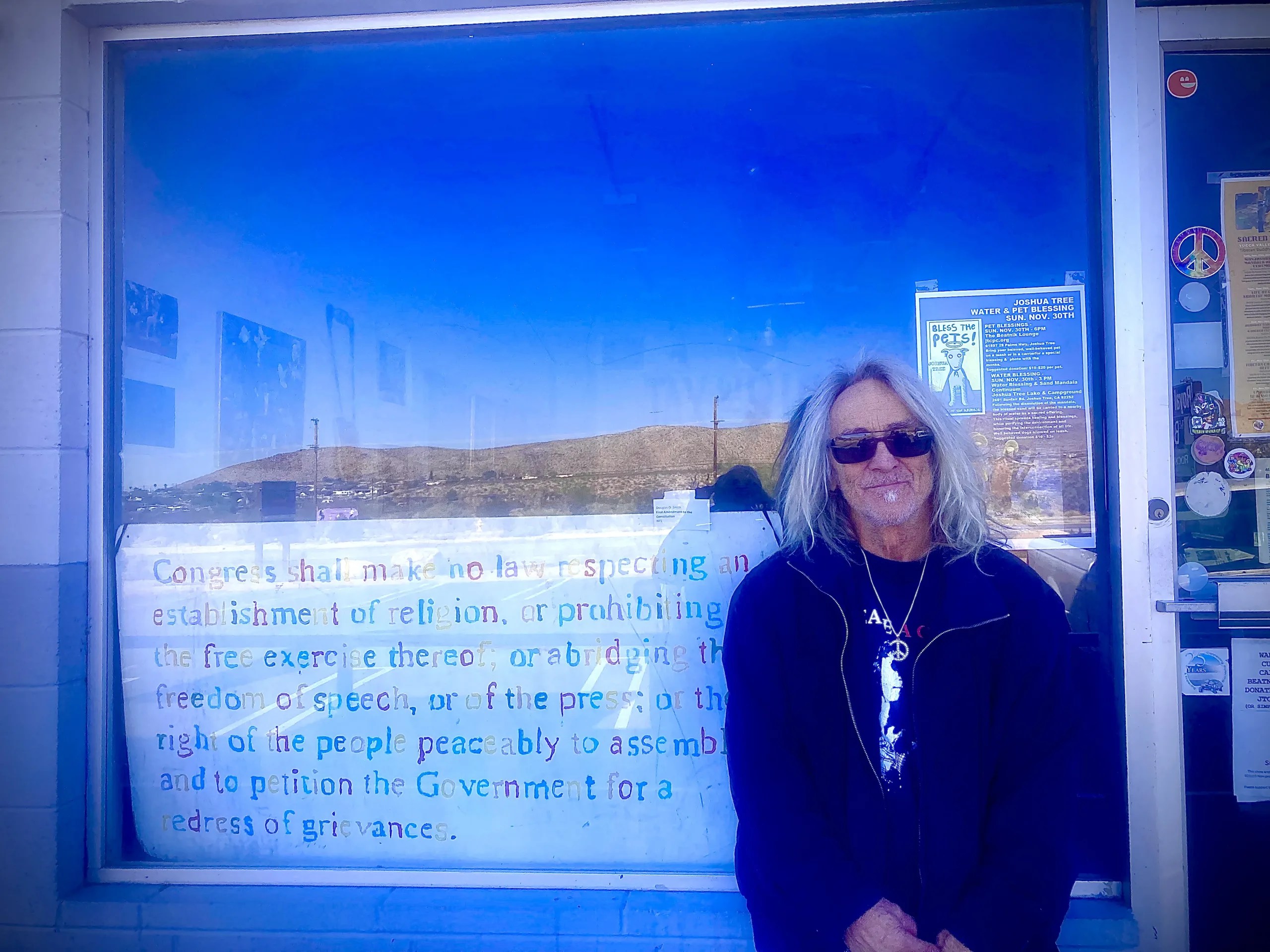
Joshua Tree’s Beatnik Lounge would be the Morongo Basin’s longest standing third space arts venue, and while they’ve had their share of challenges (including the sudden installation of a costly ADA-enforced access ramp), board member Teddy Quinn offered some insight on the Beatnik’s longevity.
“Our mission statement is just to provide a place that isn’t about profit, it’s really just about having a gathering place for kind of oddballs and that’s kind of the vibe we want. We just want it to be a place where people can try things out. I know that’s the spirit Bobby brought to Furstwurld and the difficulties of it being more in a neighborhood were kind of the beginning of his troubles as far as legalities and all of that. The Beatnik Lounge is really lucky because we’re right there in the strip mall where we’re allowed to play music at night and that sort of thing… we do kind of go from month to month and we depend on the kindness of people who (financially) support the place to keep it going. There’s no secret money that is funding it or anything like that. It’s always just kind of like a desert miracle that we keep it going.”
The Beatnik Lounge is home to a non-profit called the Joshua Tree Cultural Preservation Center who take donations to keep it alive. For full calendar of events and links to donate, please visit: http://www.jtcpc.org